Beyond the Ice Surface
When most people think of ice arena maintenance, they picture the ice resurfacer conditioning the sheet. But maintaining an arena is a deeply integrated process. The quality of the ice is entirely dependent on the environment surrounding it. From the relative humidity of the air to the physical condition of the rink boards, daily arena maintenance involves managing a complex, heavily utilized ecosystem.
Effective facility upkeep requires a disciplined approach to daily mechanical checks, structural inspections, and strict cleanliness standards. When an arena is managed correctly, problems are caught while they are small, well before they result in canceled ice time or costly emergency repairs.
Daily Operational Routines
Every operational day at a functional rink begins long before the first skaters hit the ice. Facilities professionals perform comprehensive mechanical walkthroughs. This includes checking compressor oil levels, monitoring brine pump pressures, and logging the ambient temperature and humidity within the bowl.
It’s important to understand how heavily the building's air quality impacts the ice. In warmer months, an arena without properly maintained desiccant dehumidifiers will experience rapid condensation buildup. This condensation drips onto the ice surface, creating dangerous stalagmites or dulling the ice finish. Consequently, checking the HVAC and dehumidification systems isn't just about spectator comfort—it’s a direct part of ice quality management.
Rink Boards and Physical Structures
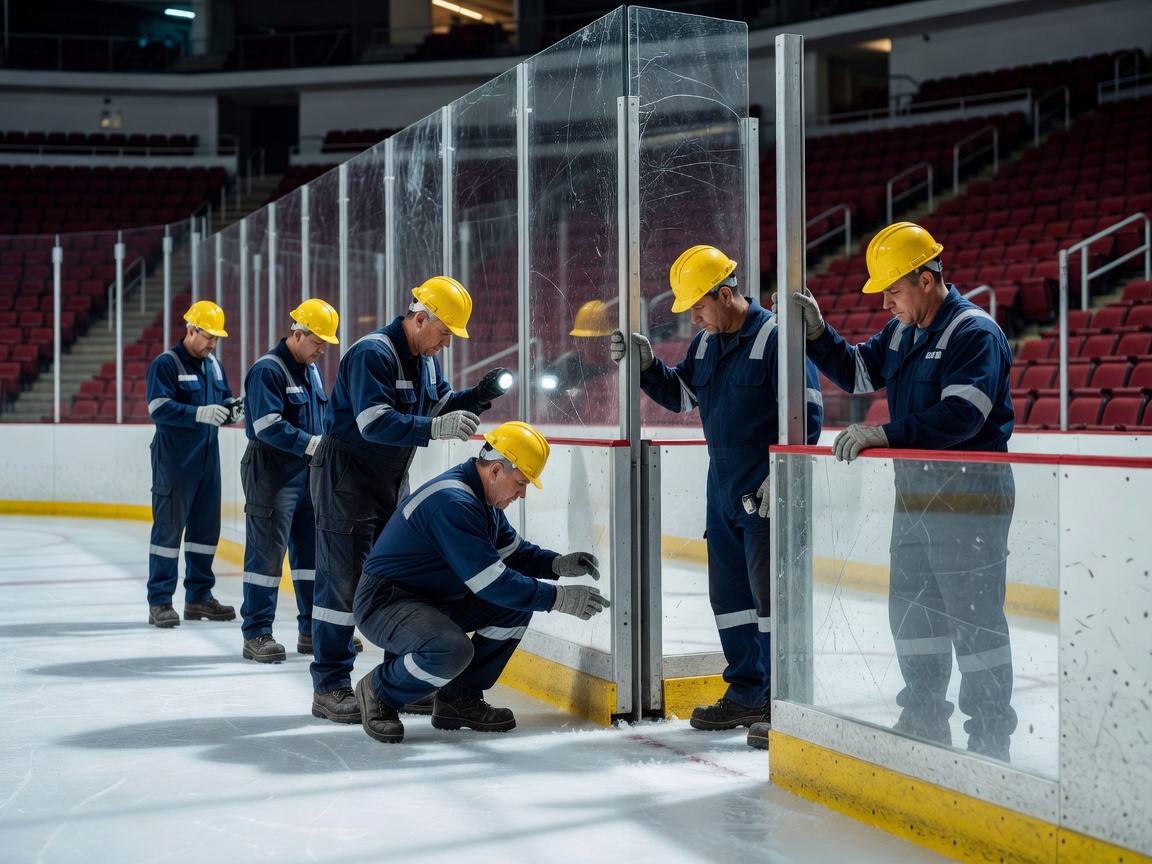
The dasher boards, acrylic shielding, and protective netting take a tremendous amount of physical abuse during hockey operations. Constant impacts loosen fasteners and shift alignment. Daily visual checks of the board system are mandatory. A protruding screw or a misaligned gate latch can cause severe injury to a player traveling at high speeds.
Facility cleanliness also plays a massive role in preventive maintenance. Debris left in the player benches or penalty boxes—such as tape, gravel from outside, or spilled sports drinks—inevitably finds external its way onto the ice. When a resurfacer blade hits a small pebble, it chips the blade. A damaged blade leaves deep grooves in the ice, leading to a cascade of maintenance headaches. Therefore, rigorous sweeping and wet-mopping of high-traffic rubberized flooring is just as critical as mechanical upkeep.
What to Know: Common Maintenance Problems
- Condensation Drip: Usually indicates a failing dehumidification system or poor building envelope sealing.
- Board Shift: Frequent temperature fluctuations can cause the concrete slab to shift slightly, misaligning gates.
- Resurfacer Blade Damage: Almost always caused by dirt or debris tracked onto the ice from poorly maintained locker rooms.
Seasonal and Preventive Maintenance
During the off-season or scheduled shutdown periods, arenas undergo deep maintenance. This is when the ice plant is often serviced, heat exchangers are cleaned, and compressor overhauls are performed. Structural maintenance also takes priority here. The concrete cold slab (if the ice is removed) is inspected for cracking or heaving, and painted lines or logos are touched up or replaced.
Scheduled preventive maintenance matters because arena systems are highly interdependent. If a cooling tower fan fails, the compressors work harder, energy costs spike, and the ice quality degrades simultaneously. By adhering to a strict calendar of filter changes, belt tension checks, and fluid analyses, a facility can drastically extend the lifespan of its million-dollar mechanical assets.
Practical Daily Checklist
- Verify compressor oil levels and operating pressures.
- Check building temperature and relative humidity.
- Inspect all rink gates, latches, and hinges for smooth operation.
- Walk the perimeter to check for loose acrylic shielding or damaged netting.
- Ensure all rubberized pathways are swept and free of debris.
- Empty all trash receptacles in player areas to prevent debris migration.